

The Rise of AI Glasses: Revolutionizing the Future of Smart Eyewear
In recent years, the tech industry has been abuzz with the development of AI-powered glasses, a futuristic blend of fashion, functionality, and cutting-edge technology. These smart eyewear devices combine augmented reality (AR), artificial intelligence (AI), and seamless integration with everyday tasks, paving the way for a new era in wearable technology. Whether it’s improving daily convenience or transforming industries like healthcare and gaming, AI glasses are poised to reshape the way we interact with the world.
In this blog, we’ll dive into the various facets of AI glasses—what they are, their features, applications, and how they are revolutionizing both personal and professional experiences.

What Are AI Glasses?
AI glasses are a form of smart eyewear equipped with AI capabilities that can perform tasks traditionally handled by smartphones, computers, or even more specialized devices. These glasses often feature augmented reality (AR), providing users with a layer of digital information overlaid on the real world. Powered by artificial intelligence, AI glasses can perform complex tasks like real-time translation, facial recognition, navigation, and much more—all while remaining discreet and wearable.
From the iconic Google Glass to upcoming devices from companies like Apple and Microsoft, AI glasses are quickly evolving from concept to reality, offering a range of practical applications that go beyond the typical smartphone experience.

Key Features of AI Glasses
Augmented Reality (AR):
One of the defining features of AI glasses is augmented reality. This allows users to view the real world with digital overlays such as navigation instructions, notifications, or contextual information, which can be seen directly through the lenses. This is especially useful for tasks such as real-time navigation or receiving directions during a walk or commute.

Voice Control & Assistants:
AI glasses often integrate voice assistants like Amazon’s Alexa, Google’s Assistant, or Apple’s Siri. With voice commands, users can control functions like making calls, sending messages, adjusting settings, or even requesting information—all hands-free. This hands-free functionality makes AI glasses a game-changer for multitasking and accessibility.

Facial Recognition:
Some AI glasses come with facial recognition technology, allowing users to easily identify people in real-time. This can be used for security purposes, in retail environments, or even for social interaction—recognizing friends or colleagues based on stored data.
Real-Time Translation:
Imagine traveling to a foreign country and not needing a translator—AI glasses can instantly translate signs, menus, or even conversations, providing users with seamless communication in foreign languages.

Connectivity and Integration:
AI glasses can seamlessly connect to other smart devices, including smartphones, tablets, and computers. They may allow users to receive notifications, interact with apps, and even control smart home devices directly from the glasses.
Applications of AI Glasses
1. Healthcare
AI glasses are set to make waves in the healthcare industry. For medical professionals, these devices can overlay vital patient information directly into the clinician’s field of view. This allows for more informed decision-making and can enhance precision during surgeries or other procedures. Additionally, AI glasses can assist in real-time medical training, displaying critical data and instructions for trainees during practice.
2. Work and Productivity
For the modern worker, AI glasses can boost productivity by offering hands-free access to emails, calendars, and other work-related tools. For example, an architect wearing AR glasses can view blueprints and models without needing to take out a tablet or smartphone. In remote work, these glasses can be used for video conferencing, delivering virtual presentations, or even controlling desktop systems with voice commands.
3. Gaming and Entertainment
The world of gaming has found new potential with AI glasses. By integrating AR and AI, gamers can interact with their environment in new and exciting ways. From viewing game stats in real-time to immersive, location-based games that blur the lines between the physical and digital worlds, AI glasses can provide gamers with a truly unique experience.
4. Fitness and Sports
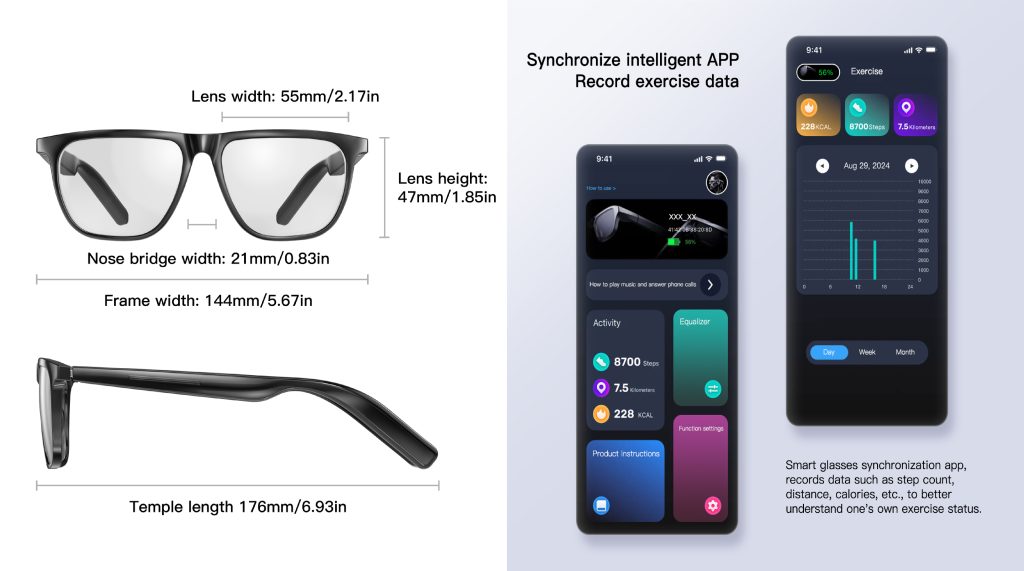
AI glasses are also making their mark in sports. These devices can track performance metrics, display workout data, or even guide users through exercises, all while offering a hands-free experience. Athletes can access real-time stats such as heart rate, speed, and time, without ever having to glance down at a smartphone or wristband.
5. Retail and Customer Experience
In retail, AI glasses can be used for personalized shopping experiences. Imagine walking into a store and having product recommendations or special discounts appear in your line of sight based on your preferences. For store employees, AI glasses can speed up inventory checks, assist with customer service, and even guide customers to specific items within the store.

Future Trends and the Road Ahead
As AI glasses continue to evolve, we can expect several exciting developments:
Smarter AI Integration:
As artificial intelligence continues to advance, future AI glasses will likely become more intuitive, offering real-time, context-aware features. For example, AI could predict what information a user needs based on their location or activity, offering dynamic, situationally appropriate assistance.
Improved Battery Life and Design:
One of the main challenges facing AI glasses today is battery life. However, as technology progresses, we can expect longer-lasting batteries and more compact, stylish designs, making smart eyewear more comfortable for daily wear.
Wider Adoption in Industry:
Beyond consumer use, AI glasses are likely to become more integral in industries like logistics, education, and even law enforcement. From tracking inventory in warehouses to providing real-time training in classrooms, AI glasses will revolutionize professional environments.
Personalized AI:
AI glasses will likely become more personalized in the future. Imagine glasses that adapt to your daily routine, learning your preferences, and offering suggestions based on your behavior and habits.
Conclusion
AI glasses are not just a piece of futuristic technology—they are a practical, evolving tool that is transforming how we interact with the world around us. Whether you’re using them for work, fitness, healthcare, or entertainment, AI glasses offer a glimpse into a future where technology seamlessly integrates into daily life. As these glasses become more affordable, user-friendly, and feature-rich, they will undoubtedly become an essential part of our wearable tech ecosystem.
Stay tuned for the next generation of AI glasses—because the future of smart eyewear is already here.
What do you think? Are you excited about the potential of AI glasses? Let us know how you think this technology will impact your life in the comments below!